Why Productive Engagement Matters (More Than We Think)
One vacation, the bua in me made the classic mistake of letting “just one cartoon” play in the morning. That one cartoon turned into three episodes, followed by cranky behaviour, zero appetite and a meltdown because the blue spoon was looking at him wrong. Lesson learnt.
Children thrive on structure—even during holidays. Productive engagement doesn’t mean worksheets and discipline drills. It means giving children meaningful activities that channel their energy, stimulate their minds, and make them feel involved.
When my nephews were engaged in simple tasks—sorting toys, watering plants, or “helping” in the kitchen—they were calmer, happier, and surprisingly cooperative. Plus, fewer arguments. That alone deserves a medal.
Same Sleep Cycle, Happier Child (and Adults)
Let me say this with love and experience: a disturbed sleep cycle is the fastest way to turn a cheerful toddler into a tiny philosopher questioning life at 9 pm.
During vacations, we consciously maintained the same sleep and wake timings. No late-night parties for toddlers, no sleeping in till noon. The result? Better moods, improved appetite and children who actually enjoyed the day instead of surviving it.
Routine gives children emotional security. Holidays don’t need chaos; they need flexibility within a familiar framework.
Vacations in a household with young children are not holidays. They are projects. Loud, energetic, emotionally charged projects with snacks every 20 minutes. Having spent multiple vacations with my twin nephews, I can confidently say this: children don’t need exotic destinations or fancy toys—they need time, routine and purpose, served with a dash of fun and a lot of patience.
Every vacation at home begins with a dramatic announcement: “No school!” followed by the silent assumption that sleep schedules, meal timings and sanity would also go on vacation. That’s when the real work begins—keeping little humans productively engaged without turning the house into a trampoline park.
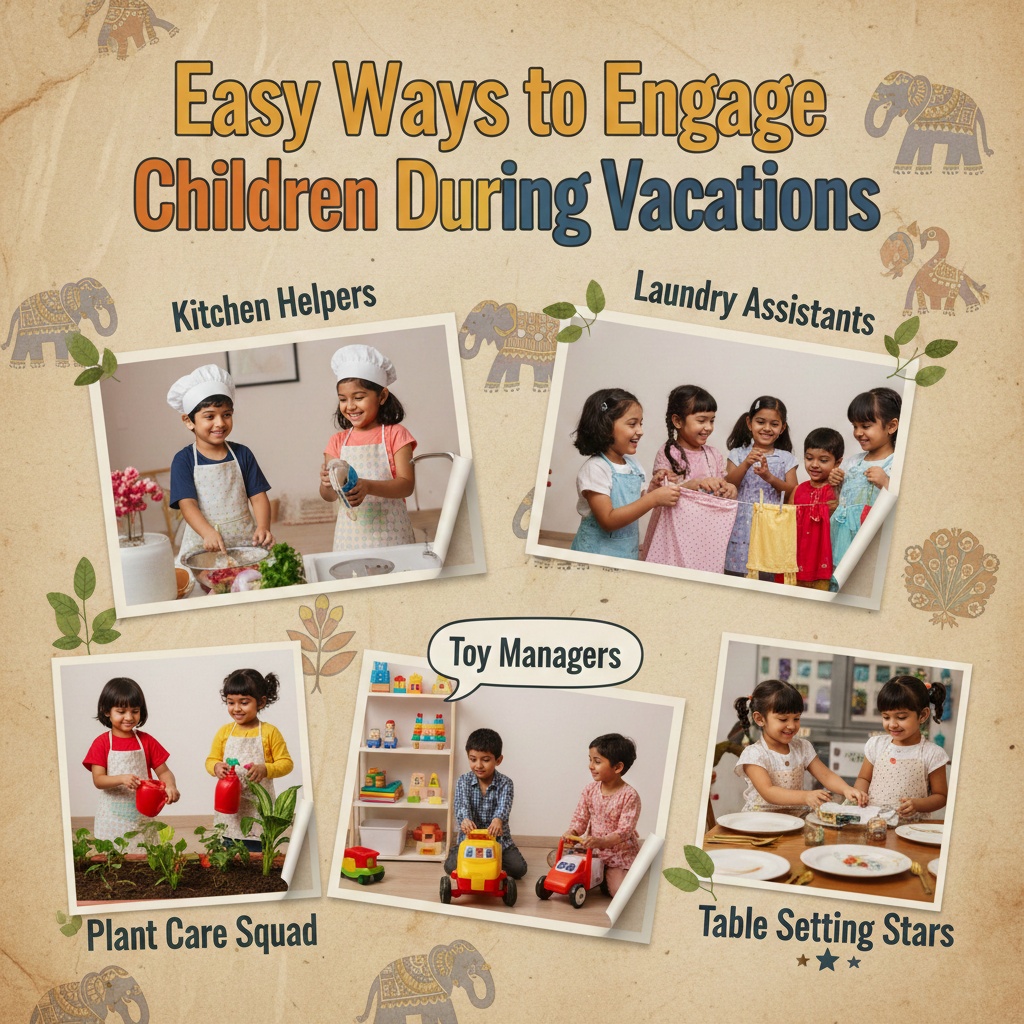
Easy Ways to Engage Children (Aged 2–5) Using Household Chores
Here’s the secret parents rarely hear: children love responsibility—especially when it comes with praise and zero pressure.
1. Kitchen Helpers (2–5 years)
Let them wash vegetables, tear coriander leaves, or stir batter with supervision. My nephew proudly announced, “I made lunch!”—even though all he did was wash tomatoes. Confidence level: CEO.
2. Laundry Assistants (3–5 years)
Sorting clothes by colour or pairing socks becomes a game. Bonus: early math skills and less laundry drama.
3. Toy Managers (2–4 years)
Ask them to arrange toys by size or colour. Add a timer and suddenly cleaning is an Olympic sport.
4. Plant Care Squad (3–5 years)
Watering plants or wiping leaves builds empathy and responsibility. Also, children don’t argue with plants. Yet.
5. Table Setting Stars (4–5 years)
Placing napkins, spoons or plates gives them a sense of ownership. Meals taste better when you helped set the table—scientifically unproven but emotionally accurate.
The Real Takeaway
Vacations are not about doing more; they are about doing things together. My time with my nephews reminded me that children don’t remember how clean the house was—but they remember being included, trusted and valued.
So this vacation, skip the guilt, maintain the routine, switch off excessive screens and let children be a part of everyday life.
Spending time with my nephews reminded me that childhood thrives in simplicity: shared meals, familiar routines, small responsibilities and lots of laughter. And honestly, somewhere between folding socks and watering plants, I think the adults learn a thing or two as well.
Because at the end of the day, the best holiday gift we can give children is our time—unrushed, undistracted and genuinely joyful.
–Divya Joshi
Co Founder, Niño & Niña Preschool










Vaidehi (Divisha's Mumma)
January 5, 2026I think, holiday involves a balance of structured fun, learning new skills and ofcourse family time also activities and outdoor adventures like sports, playing and nature walks and all within a flexible routine. It also allows for choice and limits excessive screen time. They get to get new hobbies such as dancing, learning new words etc. My daughter loves to explore new spots and she loves going outside. But she also miss her school and especially her Madhabi mam. Thanks nino and nina.
Jyoti
January 5, 2026That’s such an important point. The routine should not be broken as it really helps. Kids who are a part of house chores grow up lot of self confidence.
I am also trying my bit to wake up at same time as everyday and helping in my house 🙂
Shipra Gupta
January 5, 2026This blog beautifully captures the heart of child-centered holidays—where routine, empathy, and shared tasks become the real magic. A gentle reminder that meaningful engagement outshines screens and chaos every time.
Manali Arora
January 6, 2026So insightful and refreshing. We usually think vacations mean no routine at all, but this offers such a balanced perspective.
“Holidays don’t need chaos; they need flexibility within a familiar framework.”
Loved this takeaway.